 facebook
 Whatsapp
 Email
Email
 Link
Link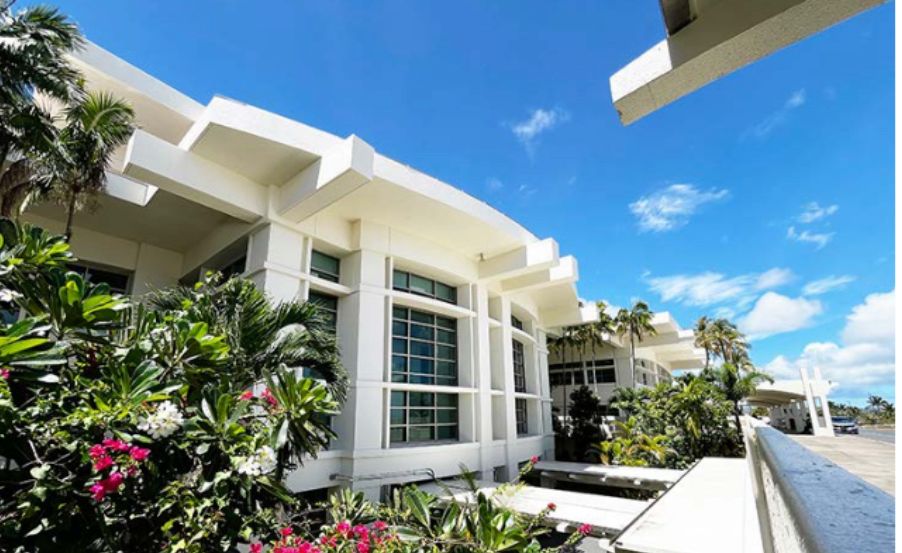
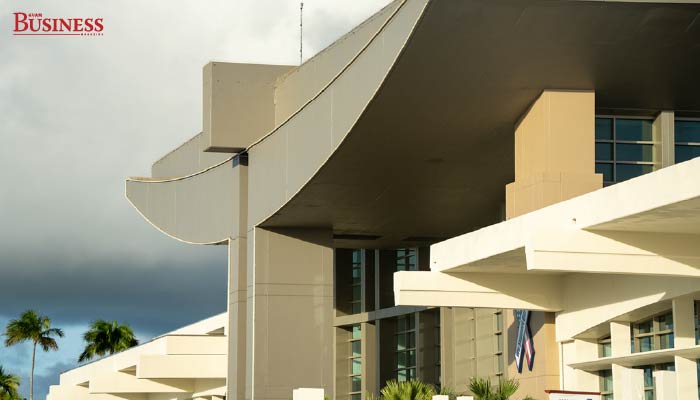
Photo courtesy of Guam International Airport Authority
By Pauly Suba

Ports of entry to the islands – ports and airports – face opportunities and challenges and are dependent on private sector communication and participation.
In the Marianas, ports and airports serve as lifelines. They not only move goods and people; they anchor the region’s economy, defense logistics, and disaster recovery efforts. In Guam, the Port Authority and International Airport Authority are pushing forward on parallel tracks of modernization, fiscal reform, and policy realignment. Meanwhile, in the Northern Mariana Islands, long-overdue upgrades and regional planning are underway to stabilize tourism, transport, and trade.
The Port Authority of Guam closed fiscal year 2024 with a clean audit, a $34.3 million net position, and continued progress on modernization efforts supported by private sector collaboration and federal investment.
Rory J. Respicio, general manager of the Port Authority of Guam, says the port’s partnerships with tenants and key agencies are essential to sustaining operations and achieving long-term goals.
“Private sector collaboration is central to the Port’s daily operations and long-term planning,” Respicio says. “As Guam’s only commercial seaport, we rely on strong relationships with our Port Users Group, which includes carriers, shipping agents, fuel operators, trucking companies, logistics providers, and critical government partners such as Guam Customs and Quarantine, the United States Coast Guard, the Guam Department of Agriculture including Biosecurity and Marina support, and the Guam Fire Department.”
“Their coordination helps us identify bottlenecks, improve gate operations, respond to emergencies, and plan for major efforts such as gantry crane replacement and the broader Port modernization plan.”
Among the collaborative efforts highlighted by Respicio was the port’s tariff adjustment petition currently under review by the Public Utilities Commission. The proposal updates labor and equipment fees that have remained unchanged since 2020.
“We did not move forward alone,” he says. “We engaged stakeholders and shaped a phased approach focused on predictability and fairness. This petition is about aligning Port charges with actual service costs while protecting consumers.”
Respicio says analysis shows the consumer impact would be minimal with less than one-tenth of a cent for a can of SPAM, a fraction of a penny for a can of soda, about 2.5 cents for a 20-pound bag of rice, and just over one-third of a cent for a head of lettuce. “That same spirit of collaboration was key during the global supply chain crisis,” Respicio says. “While other ports experienced severe delays, we remained open and kept cargo moving.”
He also points to Public Law 38-26, authored by Senator Jesse Lujan and signed by Gov. Lourdes A. Leon Guerrero, which allows lease offsets for capital improvements made by tenants.
“This is not rent relief,” Respicio says. “It is a reinvestment tool that advances shared infrastructure goals while keeping tenants engaged and committed.”
Respicio outlined four areas of expanding public-private opportunity:
Clean Port Initiatives – The port is pursuing zero-emission cargo handling goals, backed by a $2.4 million clean ports grant. Partnerships with equipment manufacturers and energy providers are key to electrifying yard tractors and adopting alternative fuels.
Technology Modernization – System upgrades are underway for the Financial Management System, Terminal Operating System, and cybersecurity protocols. Automation of gate entry and cargo tracking is a priority.
Infrastructure Resilience – Planned improvements include rehabilitation of H-Wharf, perimeter security upgrades, solar lighting, beach facility amenities, and new warehouse space, including joint-use readiness infrastructure in support of Indo-Pacific defense.
Workforce Development – The Port is expanding joint training programs with private employers to build a skilled labor pool.
“These efforts reflect the direction and leadership of the governor, lieutenant governor, and the Port Authority’s Board of Directors, who continue to support sustainable growth, operational accountability, and meaningful collaboration with the private sector,” Respicio says. “Our partnerships with the private sector, specifically the Port Users Group, ensure that the systems we build remain strong, adaptable, and built to serve this community for generations to come.”
The port signed a $10.5 million lease agreement with Black Construction Corp. to fund long-term repairs to Hotel Wharf and nearby infrastructure.
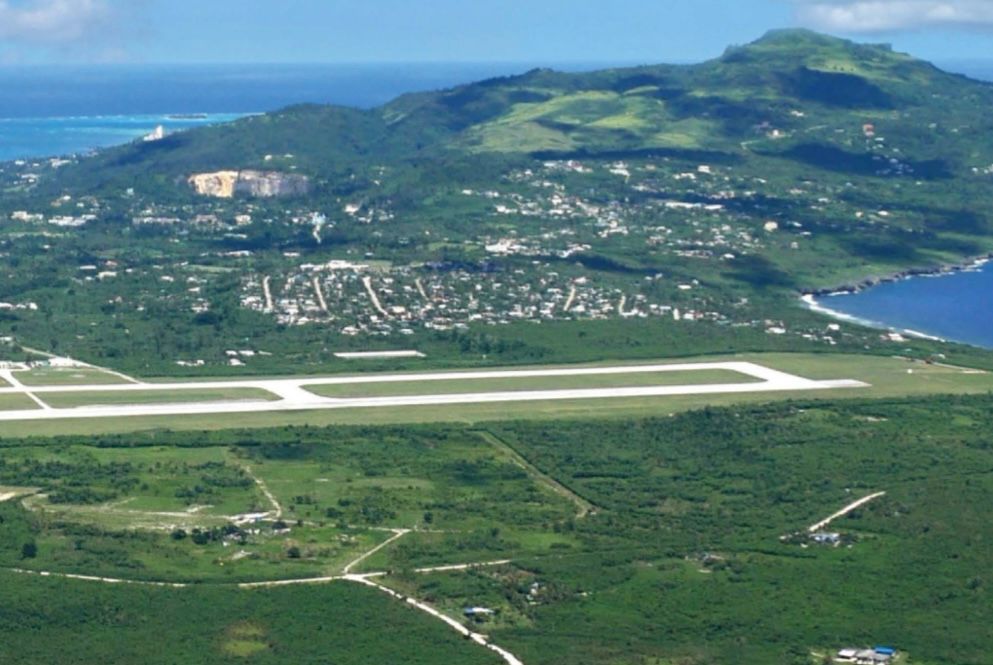
Photo courtesy of Marianas Economic Roadmap
According to the port’s latest audit, In fiscal 2024, the port handled over 85,000 containers and saw a 22% increase in roll-on/roll-off cargo. It launched more than $21 million in capital projects ranging from pipeline work to Equipment Maintenance and Repair building repairs, with support from FEMA and the Economic Development Administration.
Bond debt was reduced to $61 million, and insurance coverage increased through a revised property appraisal of $435.8 million. Over 80 personnel were trained in crane operation, equipment handling, and procurement, alongside reinstated on-the-job training programs.
In June, the port received five new 5.5-ton forklifts, part of an $8.47 million modernization package under the U.S. Maritime Administration’s America’s Marine Highway Program. The equipment also includes:
2 loaded container handlers
3 - 10-ton empty container handlers
9 container yard tractors
1 - 180 foot boom lift
2 mobile reefer generators
At the Antonio B. Won Pat International Airport, a long-contested concession procurement process was finally addressed through the passage of Public Law 38-21 (Bill 67-38). The new law allows GIAA’s board to bypass the Administrative Adjudication Law and independently adopt procurement rules for concessions and facility leases, granted the policies undergo a fiscal review, a 30-day comment period, and a public hearing.
Although Gov. Lourdes A. Leon Guerrero let the bill lapse into law, she signaled caution, promising an executive order to impose additional oversight safeguards.
For GIAA, the move enables:
Concession agreements up to 15 years
Property leases up to 50 years
Faster response to market shifts and investor demands
GIAA also celebrated the inaugural Guam-Taipei direct flights with United Airlines in April and partnered with the Guam Visitors Bureau for roadshows and airline meetings in Korea, Japan, and Taiwan, targeting tourism recovery from major source markets. At home, infrastructure work continues:
New terrazzo flooring in U.S. Customs and Baggage Claim areas
FAA workshop participation for safety certification compliance
ARFF crews undergoing aircraft familiarization training on regional cargo carriers
GIAA began its exterior painting project in January and is now showing progress with the frontal area 100% complete.
John “JQ” Quinata, the executive general manager said in a release, “We appreciate everyone’s understanding and patience as our contractors and airport teams continue to complete these renovations and improvements.” He said, “We also thank our airline partners and airport stakeholders for their continued cooperation in planning, coordinating, and adjusting to the capital improvement projects progressing throughout the terminal areas.”
Passengers arriving at the terminal may also encounter construction within the U.S. Customs and Border Protection Immigration Screening and Guam Customs and Quarantine Agency Baggage Claim areas. Meanwhile, departing travelers will notice work underway near the United Airlines ticket counters, which are covered up and awaiting check-in improvements.
United Airlines is also improving its ticket counter space for enhanced passenger experience and making upgrades to its systems, according to the release from GIAA. “This project will certainly enhance passenger experience, and we thank United Airlines for their investment and commitment to passenger satisfaction,” Quinata said.

Guam could welcome more than a million visitors in fiscal year 2026 if current air travel trends hold and continued legislative support is secured, according to an update presented by Regine Biscoe Lee, president of the Guam Visitors Bureau during a special meeting of the Guam Legislature’s Committee on Economic Services on July 3.
Lee outlined a series of tourism events, economic impacts, and air travel recovery efforts, including the agency’s core strategy to offer airline incentives that help maintain and grow airlift from key source markets, particularly South Korea.
“Our current projection is about 785,000 visitor arrivals (for fiscal 2025),” Lee says, sharing that Guam has already achieved more than 95% of its October through May goal. “We’re finding ourselves in between the conservative and moderate forecasts.”
GVB’s updated economic forecast estimates direct traveler demand in 2021 at $128 million, with total industry impact at $306 million, supporting approximately 12,425 jobs and generating $57 million in taxes.
Lee also shared marketing highlights, including Guam’s growing presence in Asian markets. “We had a film crew here from TV Tokyo… They’re anticipating a viewership of over 5 million people throughout Japan,” she said. “In Korea, our recent event was the Guam Brand Day at a sold-out stadium… About 22,000 people were in attendance.”
But despite promotional successes, Lee described multiple obstacles that severely impacted seat capacity from Korea, Guam’s largest visitor source market.
“Guam was hit with the real perfect storm,” she said. Among the challenges: Typhoon Mawar, a mandated halt in certain Korean air routes due to the merger of Korean Air and Asiana Airlines, weakened Korean and Japanese currencies, airline accidents, and global aircraft delivery delays.
Looking ahead, GVB’s optimistic forecast for fiscal 2026 projects 1,044,162 visitor arrivals, contingent on continued funding. Lee warned that Guam could see a steep drop in arrivals without airline incentives to around 667,787.
“To achieve this goal, again, we need the full support of the legislature, the Tourist Attraction Fund, and additional support from the General Fund or whatever source OFB can identify,” she said.
Lee said that while GVB was able to reprioritize funds and reduce administrative expenses to support airline incentives in fiscal 2025, that strategy is no longer sustainable moving forward.
She says that GVB is already tracking below projected revenue levels for the current fiscal year. “We’re actually tracking below TAF projection,” Lee said. “(GVB is) about $5 million short. And that’s just to cover our existing level of support across our different departments, destinations, administration, and marketing.”
Thanks to airline incentives and GVB’s outreach, including meetings with carriers in April, Guam’s monthly seat capacity from Korea rebounded from around 38,000 in early fiscal 2025 to over 60,000 projected for August. “Our incentives are working,” Lee says. “But these gains are not guaranteed.”
Lee emphasized that without continued support, these hard-won gains could quickly reverse. “Once we lose (airline seats), it will be much harder and more costly to rebuild this air capacity than it is to sustain it now,” she says.
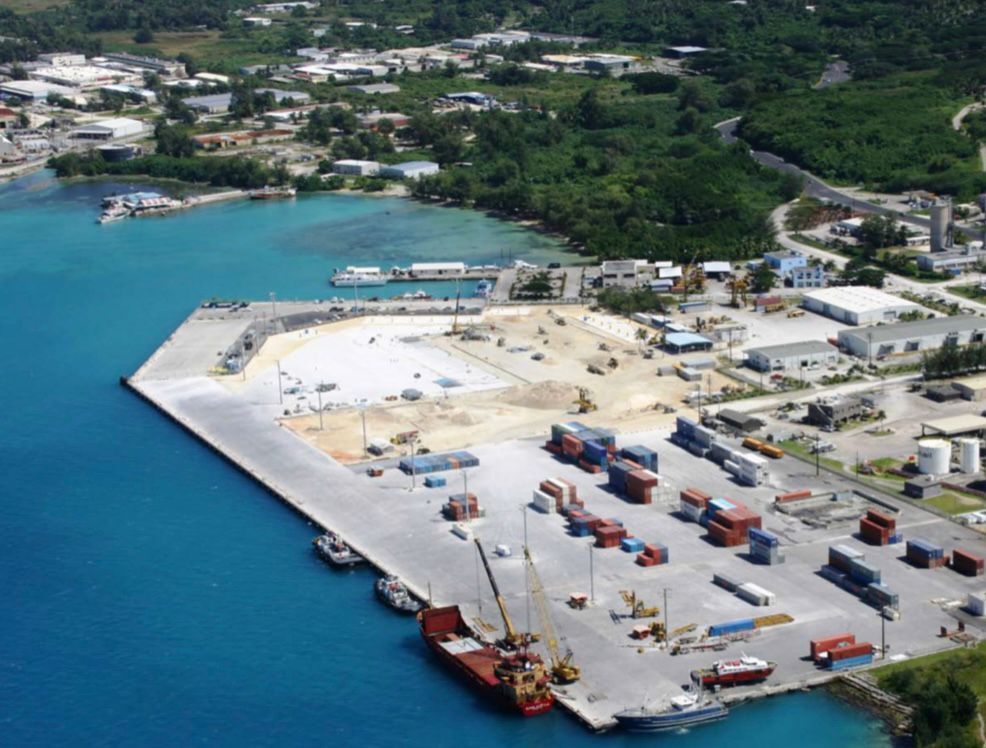
Photo courtesy of CNMI Ports Authority
The Commonwealth Ports Authority oversees five airports and four seaports across Saipan, Rota, and Tinian. After years of disaster impacts, deferred maintenance, and pandemic-related disruption, CPA is in a full-scale recovery and modernization mode—helped by federal designations, multi-year construction projects, and coordinated planning.
Saipan International Airport is receiving a new commuter terminal, upgraded restrooms, CBP screening, and air traffic control tower renovations.
Tinian Airport completed major upgrades to its ARFF facility, with kitchen facilities, gym, dorms, and an expanded vehicle bay. The parking lot now includes solar lighting and ADA stalls.
Rota International Airport is improving its terminal, parking, and signage infrastructure, and offers TSA screening for inbound Guam passengers.
All CPA airports are FAA-certified, equipped for night operations, and serve inter-island travelers and cargo needs via Star Marianas Air and Micronesian Air Cargo Services.
The Port of Saipan is reconstructing Berth 103 and improving bulk cargo operations, water lines, sewage systems, fire suppression, and fuel storage capacity. A 22-acre container yard and new navigation buoys enhance port safety.
Tinian Harbor has been resurfaced with lighting, restroom facilities, pavilions, and three berthing piers. The site supports defense logistics and local economic use.
Rota Harbor is receiving MARAD funding for repairs to Berths 1 and 2 and planning crane acquisition to expand operations.
All three islands are participating in the M-GNM1 Marine Highway corridor, positioning the NMI for continued grant eligibility alongside Guam.
According to the CNMI Economic Recovery Study (March 2025), revitalizing ports of entry is fundamental to reversing a sharp tourism and revenue decline. With visitor arrivals still far below pre-pandemic levels, the report identifies four strategic “bridges” for sustainable growth:
Responsive, collaborative governance
Strengthening core industries (tourism, healthcare, construction)
Developing new industrial ecosystems (agriculture, renewable energy)
Advancing inclusive recovery through environmental resilience and green infrastructure
The roadmap highlights the role of ports and airports in enabling economic diversification, trade capacity, and regional defense cooperation, especially in light of the CNMI’s reliance on imported goods and visitors.
The region’s ports face similar constraints: aging infrastructure, limited scalability, and fragmented policy implementation. The study calls for institutional reform, public-private sector alignment, and capital investment as essential tools for rebuilding competitiveness and quality of life.
“Modernizing and upgrading these critical assets is necessary to enhance the CNMI’s connectivity, support higher volumes of tourism, and improve logistical efficiency,” the study states.