 facebook
 Whatsapp
 Email
Email
 Link
LinkBy David J. John
The divergent economy: A study in structural realism
Guam’s current economic landscape is defined by a profound structural bifurcation. Those entities anchored within the construction and defense sectors are projected to sustain high-capacity operations for the next decade, fueled by a multi-billion-dollar military buildup that now serves as the island’s primary macroeconomic stabilizer. Conversely, businesses outside this defense-aligned ecosystem continue to navigate a 'new normal' characterized by persistent operational headwinds. Beyond the metrics, the 2025 Top Companies Report reveals a critical psychological pivot: from our discussions, I got the impression that Guam’s business leadership has largely abandoned the hope that current conditions are merely temporal or that a return to 2019 levels is imminent. Instead, the community has entered a definitive phase of Strategic Acceptance — retooling for the reality of the present rather than waiting for a ghost of the past.
The five stages of economic grief
To understand where we are, we have to look at where we’ve been. For the last five years, the Guam business community has been moving through the classic Kübler-Ross roadmap of grief, applied to our economy.
- Denial: Remember 2021? We told ourselves the "rebound" was just around the corner. We kept the "Year 2000" tourism brochures ready, convinced the Japanese Yen would stabilize and the tourists would flood back as if the pandemic were a bad dream.
- Anger: Then came the frustration. We blamed the airlines, we blamed GVB, and we blamed the lack of H-2B workers. "Why us? It’s not fair!" became the mantra of many.
- Bargaining: We tried to find middle ground. "If we just spend a few more million on marketing, surely we can get back to over 1 million arrivals." We tried to trade our way out of a systemic shift.
- Depression: By 2024, a heavy fog settled over the private sector. The realization that the South Korean Won and the Japanese Yen were structurally weak, that our costs were structurally high, and our product is dated, led to a period of "economic malaise." Businesses were too exhausted to innovate.
- Acceptance: This brings us to today. In our meetings with project leaders and CEOs this year, the tone has changed. The fighting has stopped. There seems to be a quiet realization that is our new norm. The 50% to 60% 2019 arrival rate isn't a dip; it's the new baseline that we need to build back from, and it isn’t going to take quarters to turn around, it is going to take years.
The glass half-full: A chance for rebirth
Now, acceptance can be viewed in two ways.
The "Glass half-empty" crowd sees our current economic outlook as a reason for lower expectations. They see a region that has plateaued, a place where you manage your decline rather than chase your growth.
But the "Glass half-full" perspective is where the opportunity lies. Once a business leader accepts that 2019 isn’t coming back anytime soon, they stop wasting "struggle energy." They stop the exhausting mental battle of wishing things were different and they move to first-principles thinking to re-engineer a new business plan.
Acceptance is the prerequisite for rebirth. If this is the new norm, we can finally start to plan. We can redeploy assets. We can come up with new ways to run our businesses that work at current volumes.
The military lifeline and the construction wall
We must be candid: Guam’s current economic outlook is heavily subsidized by the regional military realignment. However, this windfall is not without significant opportunity costs. The federal demand for capacity has effectively created a development wall for the private sector. As construction costs reach unprecedented levels, private-sector expansion, housing, and updating our tourism product has transitioned from a standard business activity to a luxury. We are currently navigating a chronic deficit of skilled labor, as we compete directly with federal projects for the island's essential technical trades. While the buildup provides a robust 5-to-10-year runway and will eventually mature into an expanded military operational economy, the BPT (Business Privilege Tax) revenues tied to peak construction are finite. We must begin cultivating economic drivers outside the fence line today to ensure long-term sustainability when the cranes eventually come down.

The tourism mirage
Then there is the "Year 2000" problem. We are trying to sell an outdated tourism model to a "Year 2025" traveler. The world has moved on. The 2025 traveler wants authenticity, digital seamlessness, and value. With the Yen and Won weak, Guam is an expensive luxury. If we have accepted lower arrival numbers, we must also rebuild our models to survive — and thrive — on this lower volume. If we don’t, we aren't "accepting"; we are just waiting to disappear.
The government bottleneck: A call for privatization
In the middle of this private sector evolution, we hit a wall: the Government of Guam.
I remember clearly meeting with Gov. Lou Leon Guerrero one day, complaining about one of her directors. I may have been blunt — I might have even called the person incompetent. The governor, defending her staff, told me the director was very competent. I spouted back, "How can you say this? The agency is broken! It’s non-functioning!"
Her response was a wake-up call for me. She said, "David, you try to run an agency with this many moving parts when management has no control over hiring, firing, or procurement. Where simple purchases take months to procure."
She was right. The problem isn’t the people in government, in fact, Government of Guam employees suffer by the broken system just as much as private sector workers—they depend on the same government services in their lives; the problem is the model itself.
If an enterprise has limited control over hiring, firing, promoting, purchasing, and investing, is that management really in control? The answer is a resounding no. We are operating a 21st-century economy with an 18th-century administrative model. Our agencies are handcuffed by archaic civil service rules that move at the speed of a glacier.
We need to privatize every function of government that is possible.
To be clear: when I say "privatize," I do not mean we have to turn every service over into a for-profit entity. I am talking about Public-Private Partnerships. We need models where the government may continue to own the assets or remain a shareholder, but the execution is handled by a structure that is allowed to move at the speed of business.
Consider GTA as the definitive benchmark. Once a deficit-ridden government utility hampered by systemic inefficiencies, it has transformed into a high-performance telecommunications powerhouse. Far from the austerity narrative often feared in privatization, GTA has expanded its local workforce, proving that the issue was never our people, it was the model. By pivoting to a corporate structure, GTA moved beyond basic connectivity to lead the region in cable landing stations and data centers, all powered by a world-class, local team.
The bottom line
Guam is at a crossroads. We have reached the stage of Acceptance. We have settled into the reality of our new economy. The "Good" is that the fighting is over and we can finally begin to rebuild. The "Bad" is that we are still tethered to a government model that acts as a restraint on that growth.
We are currently "successful" only because of federal defense spending, but that tide will eventually recede. If we don’t use this window of "flush coffers" to fix our tourism product and modernize our government through privatization and PPPs, we are just managing our own decline.
The old playbook is dead. It’s time to wake up, Guam. It’s time to write a new one.
To move Guam from "managing decline" to "active rebirth," we must transition from a model of government control to one of government oversight. The goal is to separate the political mission from the operational execution.
Based on our recent Top Companies interviews and the current economic "New Normal," here are the three primary candidates for a Public-Private Partnership or Master Lease transition.
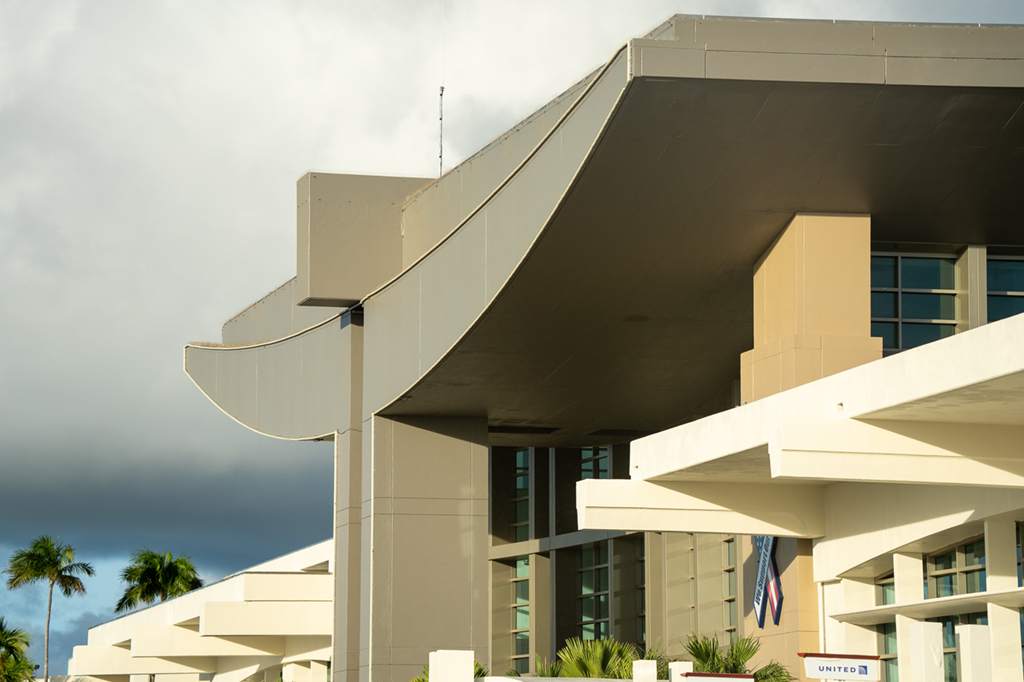
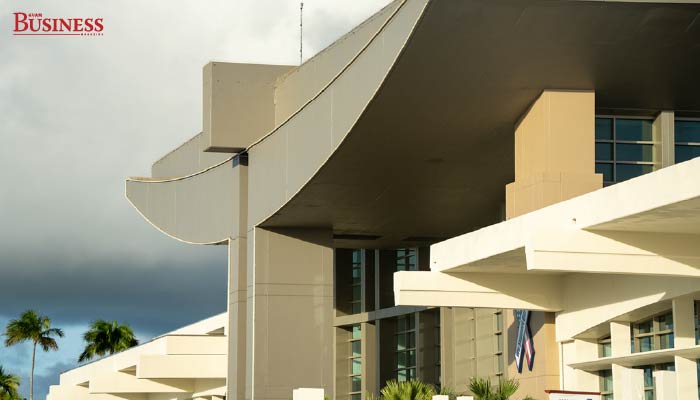
The A. B. Won Pat International Airport, Guam
The Model: Long-Term Master Lease The airport is our only front door. Currently, it is managed as an autonomous agency, but it is still tethered to government procurement and civil service structures that slow down capital improvements.
- The Proposal: Enter into a 30 to 50-year Master Lease with a global airport operator (similar to models seen in San Juan, Puerto Rico, or London Gatwick).
- How it Works: The Government of Guam retains ownership of the land and the "bricks and mortar," but a private operator takes over all operations, maintenance, and — crucially — the marketing for new airline routes.
- The Benefit: A private operator has the balance sheet to invest in "Year 2025" amenities (automated customs, high-end retail, and logistics hubs) without waiting for a government bond cycle. They are incentivized by profit to bring in more flights, effectively doing the heavy lifting for our tourism recovery.
The Guam Visitors Bureau
The Model: The "Public Corporation" Currently, GVB is a non-stock, non-profit membership corporation. While GVB has historically done marketing and promotions well, it has fallen behind in what is expected from the market and it has limited authority over the "Product", the actual cleanliness and safety of the Tumon strip and our historic sites.
- The Proposal: Reorganize GVB into a Public-Private Development Corporation with a mandate that includes Product Development and Maintenance.
- How it Works: A portion of the Hotel Occupancy Tax is locked into a dedicated fund managed by this entity. The entity is given a "Master Maintenance Contract" for the tourism districts. If a streetlight is out in Tumon or a bathroom is broken at Two Lovers Point, this entity fixes it in 24 hours using private-sector vendors, by passing the Government of Guam procurement red tape.
- The Benefit: This merges the promise (marketing) with reality (the product). We stop selling a dream that our current infrastructure can’t support.
The Guam Memorial Hospital
The Model: Management Contract & Clinical Partnership The hospital is the most emotionally debated agency on the island. However, it doesn’t matter where we build a new building, we cannot expect a hospital to be "competent" when it takes six months to procure broken equipment or a specialized nurse.
- The Proposal: A Comprehensive Management Agreement with a major U.S. Health System.
- How it Works: The government remains the "Payer of Last Resort" and owns the facility, but the entire management team is provided by the private partner. All hiring, firing, and procurement are moved to the partner’s private system.
- The Benefit: This provides instant access to a global supply chain for medicines and equipment, and a "pipeline" for rotating specialist doctors. It removes the political pressure from the hospital’s day-to-day operations and forces a "fee-for-service" efficiency that the current civil service model cannot achieve.
A Model for Success
We don’t need a government that disappears, we need a government that governs with intent. Shifting from Operator to Regulator allows the elected leaders to set the vision and plan, while the private sector executes on the day-to-day services. The message to our leadership is clear: If you do not control hiring, and procurement can’t be accomplished in real time, agencies cannot be forced to own the results. The time for excuses is over. To succeed, we must evolve. Through disciplined Public-Private Partnerships, we can create a model of success for our government services and ignite a new wave of economic prosperity for our region.