 facebook
 Whatsapp
 Email
Email
 Link
Link
Publisher
[email protected]
There is no habited place on earth that doesn’t rely on a variety of infrastructures for its government, and wider society.
If you are defining essential infrastructure, that can encompass not only all the services an economy relies on to maintain and boost economic development —but can stretch to include education and medical care — all vital services that are used as economic gauges for investors, or companies considering setting up business in one or more of our islands.
Essential infrastructures can be fragile.
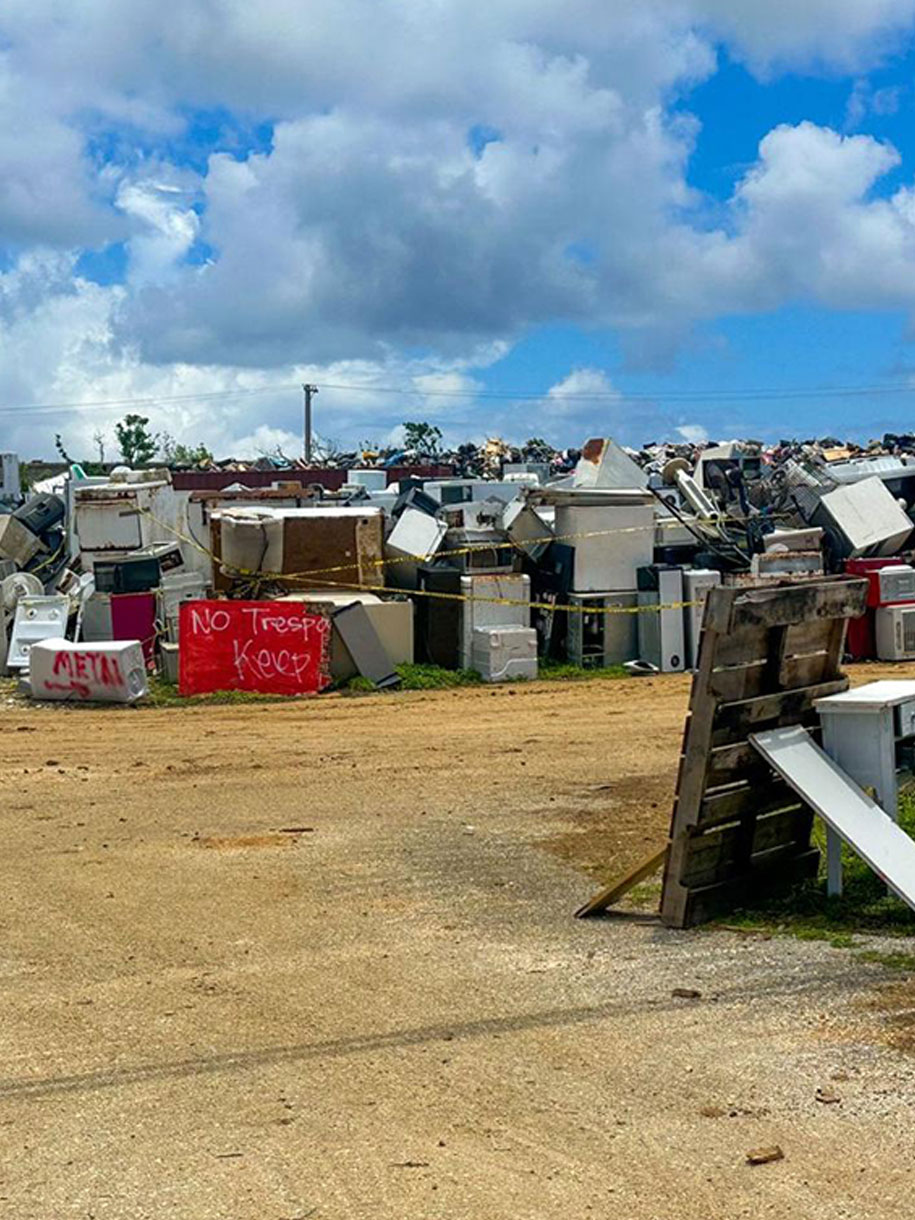
In the islands, and of course possible wherever you are reading us, we have somehow managed to live with decades-old systems for our power, water, solid waste and trash that have inevitably failed us, or failed due to a lack of forward thinking and planning or maintenance.
And like children or individuals who cannot manage their own affairs, in Guam we have also become accustomed to the federal government stepping in to manage certain essential services — like solid waste and trash.
There is no shortage of opinions on how infrastructure on the islands should be managed and of course financed.
The Economic and Social Commission for Asia and the Pacific, the Asian Development Bank, the Pacific Islands Forum, the Pacific Region Infrastructure Facility, the World Bank, the Lowy Institute (a U.S. think tank) — all weigh in regularly.
So does the U.S. Geological Survey. The writers of technical reports from the Pacific Islands Water Science Center use language so effectively that they are easy read and aid understanding of the challenges to — as the center puts it, “one of the most precious resources.”
In addition, the islands are members of the Pacific Power Association and the American Water Works Association — through a Western Pacific subsection, both of which have annual conferences, and bring together a wealth of knowledge.
Look at the boards that run our ports, and our utility agencies, and in some cases our telecom companies and you will see that they are comprised of people with experience and often from our business communities. And they are well aware, as are the management teams of the challenges to small islands.
In this Infrastructure issue we are focusing on our ports of entry in the Mariana Islands, our utilities and telecommunication. Those of us that lived through Typhoon Mawar which hit Guam in May 2023 — and saw our power, water and telecommunications fail — will understand that telecommunications is also part of our essential infrastructure these days.
But believe it or not, there is progress being made to ensure that our infrastructure elements — what we have come to realize are the bare necessities of life — are functioning as they should.
In addition to this feature and our usual departments, Saipan Correspondent Mark Rabago talks to a longstanding businessman about his business and more, and updates us.
Settle back — hopefully in your office or home with utilities firing on all cylinders, enjoy the coverage — whether you are reading us in print or on-line through your favorite device, and get caught up.